
Defence
Another, British F-35 Makes Emergency Landing at Japan’s Kagoshima Airport
A UK RAF F-35B fighter jet was forced to land in Japan’s Kagoshima Airport due to a mechanical issue, just weeks after a similar five-week grounding in India.

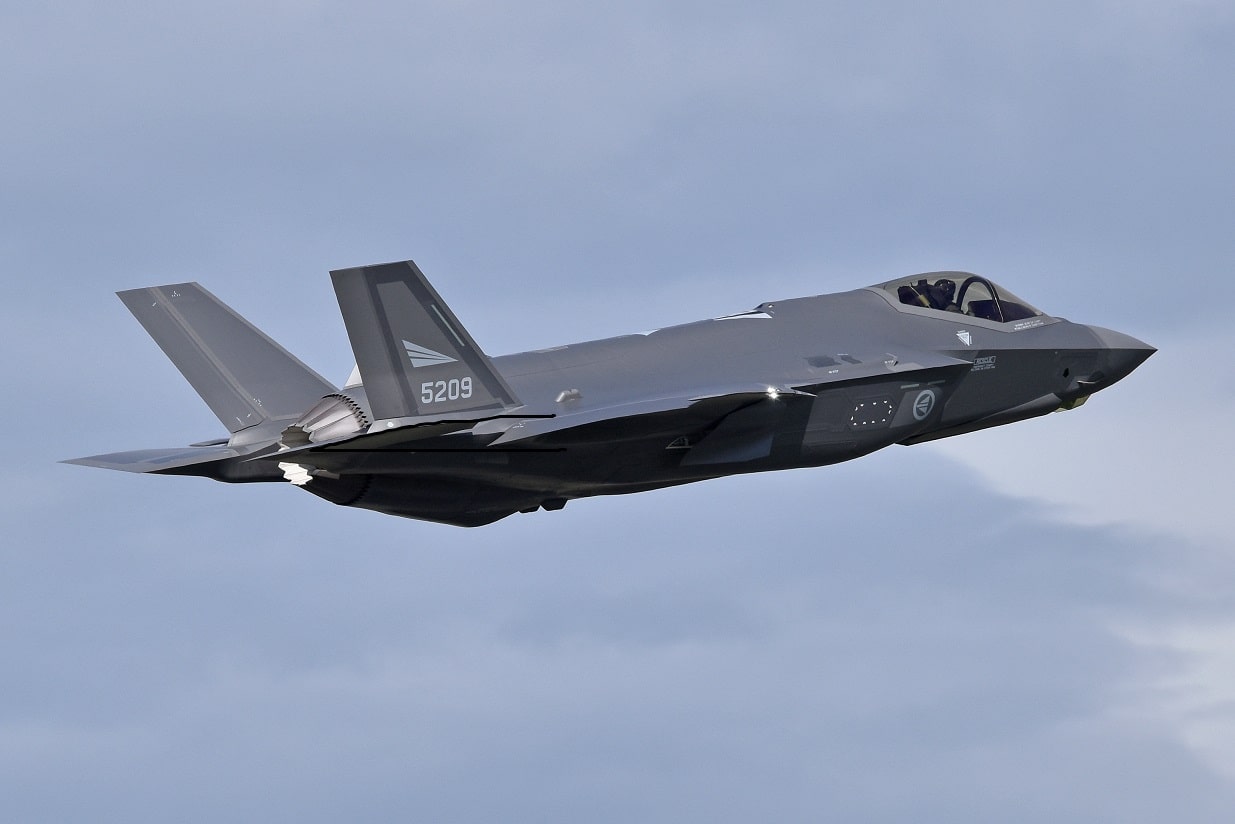
The F-35 Lightning II — one of the world’s most advanced and expensive fighter jets — has once again landed in the spotlight, this time in Japan. Just weeks after a similar incident in India, the cutting-edge warplane is making headlines for an unscheduled landing that disrupted civilian air traffic.
The Incident in Japan
A UK Royal Air Force F-35B fighter jet was forced to make an emergency landing at Japan’s Kagoshima Airport after experiencing a mechanical problem mid-air, local media reported. The incident occurred around 11:30 a.m., prompting a temporary closure of the runway for 20 minutes and causing delays to some civilian flights.
Similar Case in India
This comes only days after another F-35, also from the UK, made an unexpected landing in Kerala, India. That aircraft remained grounded for five weeks before receiving final clearance to continue its journey to the UK — a delay that drew global attention to the operational challenges of the fifth-generation fighter.
Criticism Over Operational Reliability
Following the latest episode, Chinese state-run outlet Global Times criticized the UK Navy’s ability to manage sophisticated jets like the F-35 during extended overseas deployments. The publication questioned whether British forces are struggling to cope with the aircraft’s technical complexity and intensive maintenance needs, particularly away from home bases.
The F-35 Program and Variants
The F-35 program, hailed as a pinnacle of modern air combat technology, continues to face scrutiny over its complexity and persistent technical issues. The jet comes in three variants:
- F-35A – Conventional takeoff and landing
- F-35B – Short takeoff/vertical landing (STOVL)
- F-35C – Carrier-based operations
The jet involved in the Kagoshima incident was the F-35B, prized for its ability to perform vertical landings on both land and sea — a vital feature for naval missions.
What Happens Next?
Authorities have yet to confirm how long the aircraft will remain in Japan or the cost of repairs. Given the Kerala incident’s five-week grounding, aviation watchers are keen to see whether history repeats itself. Stay tuned for the latest updates on how long the F-35B will be out of action — and what this means for the UK’s global deployments.
