
Aviation
Saudi Arabia may replace F-35 with Turkies made KAAN

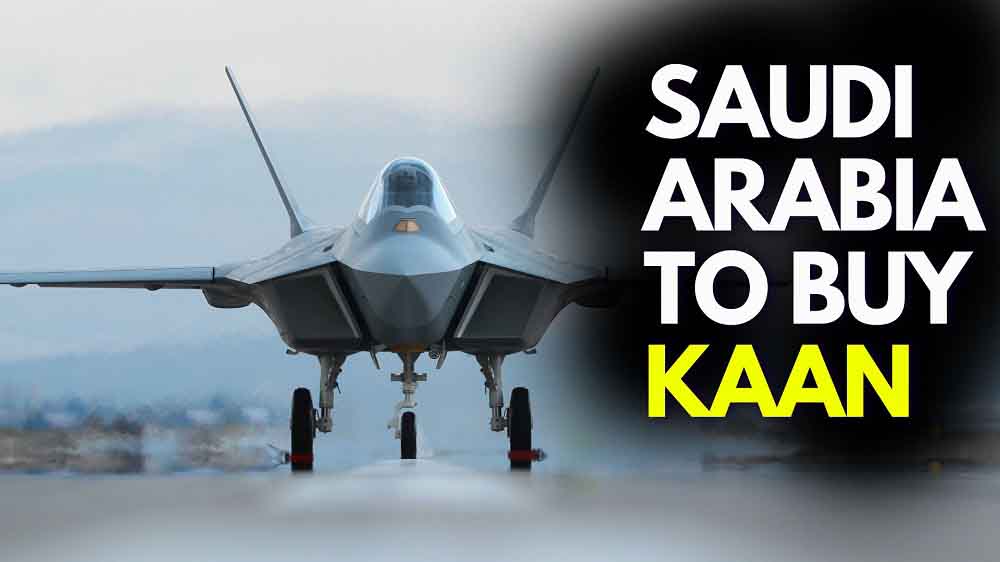
Saudi Arabia is considering purchasing around 100 of Turkey’s next-generation KAAN fighter jets.
During the visit, Prince Banda engaged in high-level discussions with key Turkish defense companies, including Roketsan and Turkish Aerospace Industries, the developers of the KAAN fighter. The discussions, held in December 2024, focused on strengthening defense ties and Saudi Arabia’s goal of boosting its self-sufficient defense industry by the 2030s.
Türkiye’s indigenous fighter jet KAAN to take to the skies in ..
The aim of these discussions was to provide the Saudi delegation with a comprehensive understanding of the KAAN’s capabilities and to explore broader defense collaboration between the two nations.
Saudi-Turkish defense cooperation
According to international defense sources, this potential acquisition could herald a new chapter in Saudi-Turkish defense cooperation, aligning with both countries’ ambitions to strengthen their military capabilities.
Previously, the Trump administration approved the sale of F-35 aircraft to Saudi Arabia, but this was denied due to geopolitical concerns, particularly regarding Israel, which operates more than 25 of these aircraft.
Ukraine enters a tender for the engine development …
Saudi Arabia and Qatar have also shown interest in acquiring F-35s. Following that, Saudi Arabia engaged in discussions with China regarding the J-31 aircraft; however, these talks were put on hold due to American diplomatic relations. Meanwhile, the UAE refused to comply with U.S. directives to sever ties with Huawei, the Chinese 5G technology giant.
Saudi Arabia made headlines by announcing a $3 billion acquisition
This proposed deal reflects Saudi Arabia’s increasing interest in Turkish defense technology. In July of last year, Saudi Arabia made headlines by announcing a $3 billion acquisition of medium-altitude, long-endurance drones.
This marked Turkey’s largest defense contract and is part of Saudi Arabia’s broader strategy to modernize its military and enhance its indigenous defense capabilities.
The deal includes provisions for technology transfer and local manufacturing, with a notable requirement that 70% of the drone components be produced domestically.
Beyond the potential fighter jet deal, Saudi Arabia’s collaboration with Turkish defense companies is expanding beyond drone acquisitions.
Saudi Arabian Military Industries has signed agreements with Turkish firms such as ASELSAN and Roketsan, covering the supply of electro-optical systems, smart bombs, and guidance kits.
Saudi Arabia is focused on achieving self-reliance in defense for the future, aiming to procure products that will support national growth and enhance its defense capabilities. Collaboration with Turkey significantly contributes to technological advancement.
These agreements emphasize the integration of advanced systems into Saudi Arabia’s defense framework.
Notably, a partnership has been formed with the Saudi National Company for Mechanical Systems to develop electro-optical surveillance and targeting systems. Additionally, Roketsan will supply weapon systems, including those for drone integration. This collaboration further bolsters Saudi Arabia’s defense capabilities.
