
Aviation
Rolls-Royce reaches new milestone building world’s largest aero-engine

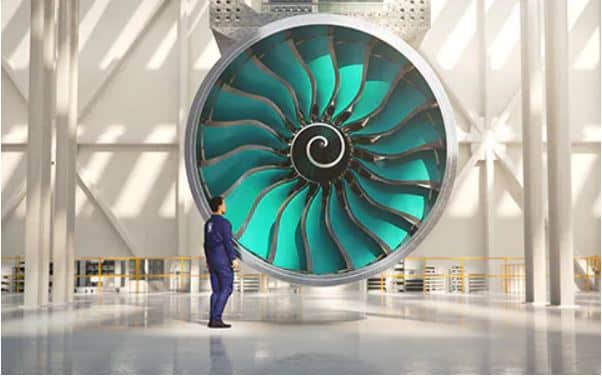
Rolls-Royce reaches a new milestone as the world’s largest aero-engine build start : Rolls-Royce has officially started building the world’s largest aero-engine, UltraFan®, which will help redefine sustainable air travel for decades to come.
Work on the first module is underway at our dedicated DemoWorks facility in Derby, UK, and the demonstrator engine, which has a fan diameter of 140 inches, will be completed by the end of the year.
The engine is the basis for a potential new family of UltraFan engines able to power both narrowbody and widebody aircraft and deliver a 25% fuel efficiency improvement compared with the first generation of Trent engine. Performance improvement is crucial to achieving aviation sustainability.
100% Sustainable Aviation Fuel
Gas turbines will continue to be the bedrock of long-haul aviation for many years, and UltraFan’s efficiency will help improve the economics of an industry transition to more sustainable fuels, which are likely to be more expensive in the short term than traditional jet fuel. The first test run of the engine will be conducted on 100% Sustainable Aviation Fuel.
Read more : Boeing 737 Max to be operated most of the world except one country
As the engine build starts, other key parts are already coming together for delivery to Derby. Work is underway on UltraFan’s carbon titanium fan system in Bristol, UK, and its 50MW Power Gearbox, which is powerful enough to run 500 family cars, in Dahlewitz, Germany.
UltraFan is part of Rolls-Royce’s IntelligentEngine vision – for example, each fan blade has a digital twin that stores real-life test data, allowing engineers to predict in-service performance.
When on test at Rolls-Royce’s new £90m Testbed 80 facility, data can be taken from more than 10,000 parameters, detecting the tiniest of vibrations at a rate of up to 200,000 samples per second. Data that helps us understand our engines and further improve them.
Key engineering features of the engine include:
- A new, proven, Advanced 3 core architecture, combined with our ALECSys lean burn combustion system, delivers maximum fuel burn efficiency and low emissions.
- Carbon titanium fan blades and a composite casing that reduce weight by up to 1,500lb per aircraft.
- Advanced ceramic matrix composite (CMC) components that operate more effectively in high-pressure turbine temperatures.
- A geared design that delivers efficient power for the high-thrust, high bypass ratio engines of the future.



