
Defence
Is Iran Powerful Enough to Fight the U.S.?
The country has also issued threats regarding its nuclear capabilities, warning of potential retaliation against the U.S. if conflict erupts.

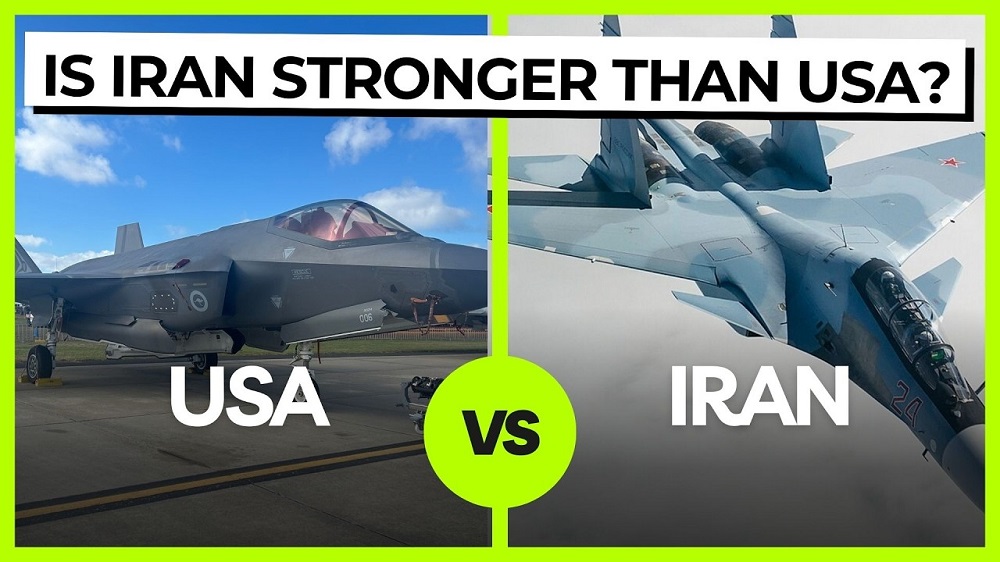
Rising Tensions Between Iran and the U.S.
Tensions between Iran and the United States are at an all-time high, raising concerns of escalation in the Middle East. Daily warnings and exchanges between the two nations have put the region on high alert, particularly in Yemen, Iran, Syria, and surrounding areas.
Iran’s Defense Strategy
Iran has showcased its underground bunkers designed for storing fighter jets, a critical measure to protect its air assets. The country has also issued threats regarding its nuclear capabilities, warning of potential retaliation against the U.S. if conflict erupts.
Recent footage reveals trucks carrying missile launchers, including long-range and anti-ballistic missiles, being transported to undisclosed locations. Many of these weapons are stored underground in fortified facilities, resembling a movie set but serving as Iran’s most strategic defense infrastructure, capable of launching missiles at any moment.
U.S. Military Response
In response, the United States has deployed four B-2 stealth bombers to Diego Garcia in the Indian Ocean, along with mid-air refuelers to support long-range missions. The U.S. has also issued a strong warning to Iran, urging it to refrain from any nuclear escalation.
While Iran has rejected direct nuclear talks with Washington, it has signaled a willingness to engage in indirect negotiations through Oman, indicating a preference for diplomacy over immediate confrontation.
Is Iran Powerful Enough to Fight the U.S.?
Iran has significant military capabilities within the Middle East but falls far short of matching the United States, a global superpower.
Iran’s Military Strengths
- Ballistic Missiles & Drones: Iran possesses one of the largest ballistic missile arsenals in the region and has developed advanced drones capable of precision strikes.
- Proxy Forces: Iran supports militant groups like the Houthis, Hezbollah, and Hamas, which can disrupt U.S. and allied interests in the region.
- Russian Military Support: Iran has reportedly acquired modern fighter jets and weapons from Russia, though operational details remain undisclosed.
- Regional Leverage: Iran benefits from its influence over neighboring countries, restricting U.S. naval access to certain Middle Eastern waters.
- Advanced UAVs & Drones: Iran’s drone technology has improved significantly, enabling it to carry out more precise and sophisticated attacks.
Limitations Against the U.S.
- Air & Naval Superiority: The U.S. has unmatched airpower, including B-2 stealth bombers and aircraft carriers, and maintains superior missile defense systems.
- Troop Presence: The U.S. has approximately 50,000 troops stationed in the region, according to Iranian estimates.
- Economic Constraints: U.S. sanctions have severely weakened Iran’s economy, with high inflation and unemployment reducing its ability to sustain prolonged conflict.
- Outdated Military Equipment: Iran’s air force and navy remain outdated compared to U.S. technology. While its nuclear program has progressed (with uranium enrichment reaching 60% purity), it is not yet weaponized, limiting its strategic leverage.
