
Defence
GTRE Receives First Kaveri D-1 Engine, Boosting Atmanirbhar Bharat
The handover of D-1 shifts the Kaveri program from prototypes to production-quality engines, boosting India’s self-reliance in aerospace propulsion technology.

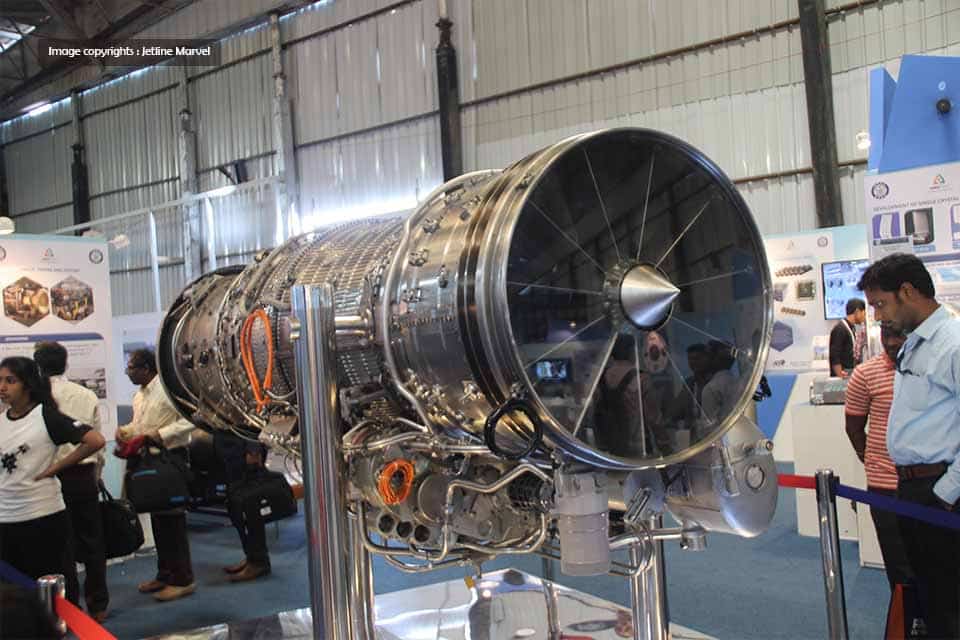
India’s long-standing ambition to build its own world-class jet engine has taken a decisive leap forward. On September 21, 2025, Godrej Aerospace delivered the first serial production unit of the Kaveri Derivative Engine (KDE), designated as D-1, to the Gas Turbine Research Establishment (GTRE).
Unlike earlier handovers of prototypes, this marks the transition to production-quality hardware, a milestone that is being celebrated as a major achievement under the Atmanirbhar Bharat initiative.
What Makes the KDE Special
The Kaveri Derivative Engine is a dry variant of the original Kaveri turbofan, meaning it operates without an afterburner. It produces about 48 kN of thrust and is primarily intended for platforms like the Ghatak stealth UCAV.
While earlier P-series prototypes were meant to prove concepts, the D-1 is built with serial production standards—focusing on repeatability, modular design, and reliability—qualities essential for scalable deployment and operational use.
The Journey from Contract to Delivery
This milestone is the result of a journey that began in September 2022, when Godrej Aerospace secured a contract to manufacture eight engine modules. By April 2025, the company had already delivered two modules for testing.
The handover of D-1 now represents a new stage where engines are being built not only to demonstrate capability but also to undergo qualification and endurance trials. The remaining six engines are expected to be delivered by the end of 2025, ensuring the project remains on schedule.
Collaboration Driving Self-Reliance
The KDE program is a product of national collaboration. GTRE leads as the design authority, while Godrej Aerospace is the primary production partner.
Other contributors include HAL, Tata, BHEL, and MIDHANI, all playing vital roles in areas like materials, integration, and manufacturing. Together, they are creating a self-reliant aero-engine ecosystem in India, reducing dependence on global giants such as GE, Rolls-Royce, and Safran.
Roadmap for Testing and Certification
The D-1 engine will now undergo baseline performance validation and accelerated endurance checks. In 2026, engines D-2 and D-3 are planned for 150-hour endurance runs and altitude testing.
By 2027, with units D-4 and D-5, the program will move into full qualification trials, covering 300–500 hours of endurance, vibration and thermal cycling tests, as well as extreme challenges like bird-ingestion and icing scenarios. If the roadmap stays on track, the engine could be certified by the early 2030s, supporting UAVs and potentially even future fighter aircraft.
Why This Matters for India
For decades, India’s aerospace progress was slowed by its inability to master jet engine technology. Airframes, avionics, and weapons saw advances, but propulsion remained a critical gap.
The delivery of the first production-standard Kaveri Derivative Engine changes that picture. It showcases engineering maturity, persistence, and national determination to overcome one of the toughest challenges in aviation.
Looking Ahead
The handover of D-1 is more than a technical success—it is a symbol of confidence. It marks the beginning of India’s engine-building era, laying the foundation for indigenous powerplants that could one day equip drones, UAVs, and even advanced fighter jets. With this achievement, India has taken a bold step closer to joining the ranks of nations that lead the aerospace industry.
For more aerospace news, check out JetlineIntel.
Want to buy aviation merchandise? Visit Jetshop.in.
To read Jetlinemarvel’s updates on Google News, head over to Google News.
