
Defence
Tensions Between India and Pakistan Escalate Along the Borders
China supports Pakistan after the Pelagram attack; meanwhile, India ramps up defenses as border tensions escalate without confirmed new foreign military supplies.

Ongoing Tensions Between India, Pakistan, and China’s Involvement
Tensions between India and Pakistan have been escalating, and China has increasingly shown diplomatic support for Pakistan. While China is not directly involved militarily, it has publicly backed Pakistan’s position on the Kashmir issue and other related tensions.
Following the Pelagram attack in April 2025, where 26 people were killed, China sided with Pakistan by calling for an independent investigation, aligning with Islamabad’s narrative that Pakistan was not responsible. China has also reinforced its support through a series of high-level diplomatic meetings.
Military and Defense Cooperation
- Pakistan remains one of China’s largest defense partners.
- Between 2019 and 2023, Pakistan received about 82% of its military imports from China.
- Major supplies included J-10C fighter jets, U-1 class submarines, and SH-15 howitzer guns.
- China has also helped build Pakistan’s defense infrastructure and jointly developed fighter jets with Pakistan for military use.
Economic and Strategic Support
- China has heavily invested in Pakistan through the China-Pakistan Economic Corridor (CPEC), a key $60 billion component of China’s Belt and Road Initiative (BRI).
- So far, China continues to provide strong economic and strategic support to Pakistan under CPEC and broader regional cooperation.
Fact Check: Is China Supplying Weapons to Pakistan After Recent Tensions?
Following the recent conflict between India and Pakistan, some media outlets have reported that China has supplied weapons to Pakistan. However, fact-checking these claims reveals that there is no credible evidence to support them.
As of the latest updates, China has not supplied any major arms to Pakistan after the April 2025 Kashmir attack — including no transfers of JF-17 missiles or nuclear technology assistance. No verifiable evidence has emerged, and both Chinese and Pakistani officials have not confirmed any new arms deals.
These reports appear to be rumors, likely fueled by escalating tensions and speculation. Some narratives are trying to portray Pakistan as gaining military advantages with Chinese support, but in reality, China’s involvement has so far remained limited to diplomatic backing.
China has publicly called for a neutral and independent investigation into the Kashmir attack, maintaining a diplomatic stance without direct military engagement.
Fact Check: U.S. and Israel’s Support to India Amid Rising Tensions
Some posts on Twitter have claimed that the U.S. and Israel are supplying weapons and aircraft to India to strengthen its position against Pakistan. However, there has been no official confirmation of any new arms deliveries from either the U.S. or Israel following the recent Kashmir attack.
It is true that the U.S. and India share a strong defense relationship. Over the years, the U.S. has supplied India with military equipment, including Apache attack helicopters, Chinook heavy-lift helicopters, and engines for Indian fighter jets — making it one of the most significant defense partnerships.
Similarly, Israel also maintains a close defense relationship with India, having supplied advanced weapons systems and technologies in the past.
However, after the recent attack, no new military supplies have been confirmed by either country. Both the U.S. and Israel have offered diplomatic support to India but have refrained from any direct military involvement so far.
Both nations have expressed that if tensions escalate further, they stand in support of India. Additionally, it has been clarified that the fighter jets and equipment supplied to India are to be operated within Indian territory only.
Current Situation Between India and Pakistan: Rising Tensions and Military Readiness
In response to the recent attack in Kashmir, India has intensified its military preparedness. The Indian Air Force has been conducting highly intensified rehearsals, highlighted by the large-scale defense exercise “Akraman,” one of the most powerful and comprehensive drills undertaken by India in recent years.
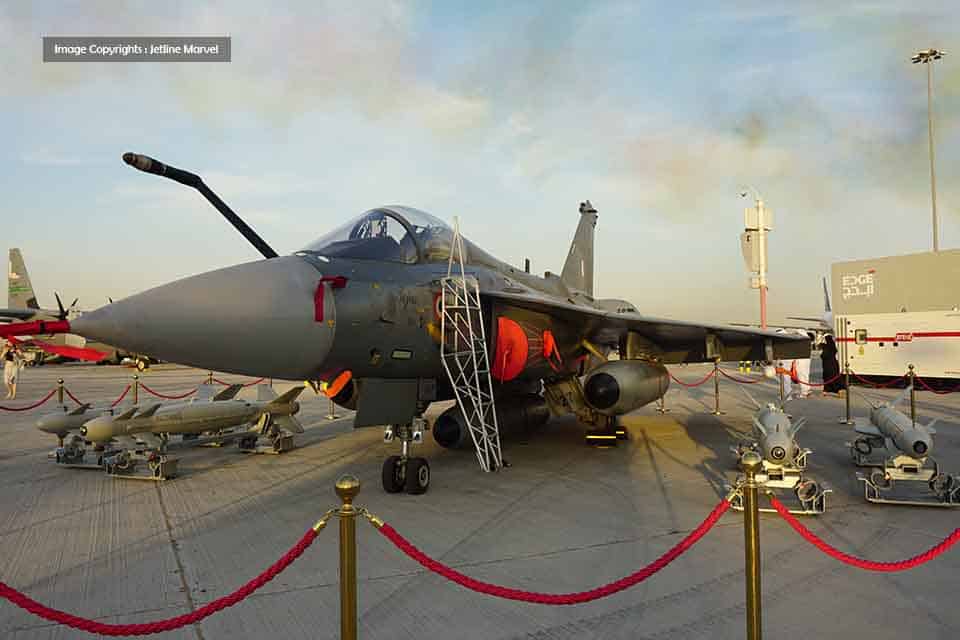
During these exercises, India is deploying its most advanced fighter jets, including the Russian-made Sukhoi Su-30MKI, the French Rafale, and the indigenous Tejas. Along with this, India is mobilizing its strongest arsenal — including long-range missiles and advanced military equipment — to strengthen its defenses and project its power against potential threats.
On the other side, Pakistan is also mobilizing its armaments, weapons, and fighter jets near the border regions, leading to an increasingly tense and heavily armed standoff. Both sides appear to be reinforcing their military positions significantly, creating an atmosphere of uncertainty about what could happen next.
Analysts suggest that the situation could escalate further, given the high level of military preparedness on both sides. The truth is, the region is on edge, and the world is watching closely.
India, shocked by the surprise attack that claimed the lives of many innocent civilians, is now questioning how such an attack could occur despite security measures. Concerns are also rising over the role of local intelligence and how the militants were able to carry out such a deadly operation.
Our Perspective
The international community has a crucial role to play in de-escalating the situation. Diplomacy, pressure from major powers, and possibly neutral investigations into the attack could help prevent a full-scale conflict. It is important that both sides find a peaceful resolution, especially considering the heavy loss of civilian lives and the dangerous potential of a military confrontation.
For more aerospace news, check out JetlineIntel.
Want to buy aviation merchandise? Visit Jetshop.in.
To read Jetlinemarvel’s updates on Google News, head over to Google News.
