
Airlines
Boeing’s last 747 to roll out of Washington state factory
Boeing is set to roll out its final 747 from a Washington state factory on Tuesday, The 747 earned the title “Queen of the Skies” by flying more opulently. The first 747 was produced in less than 16 months by more than 50,000 Boeing workers.

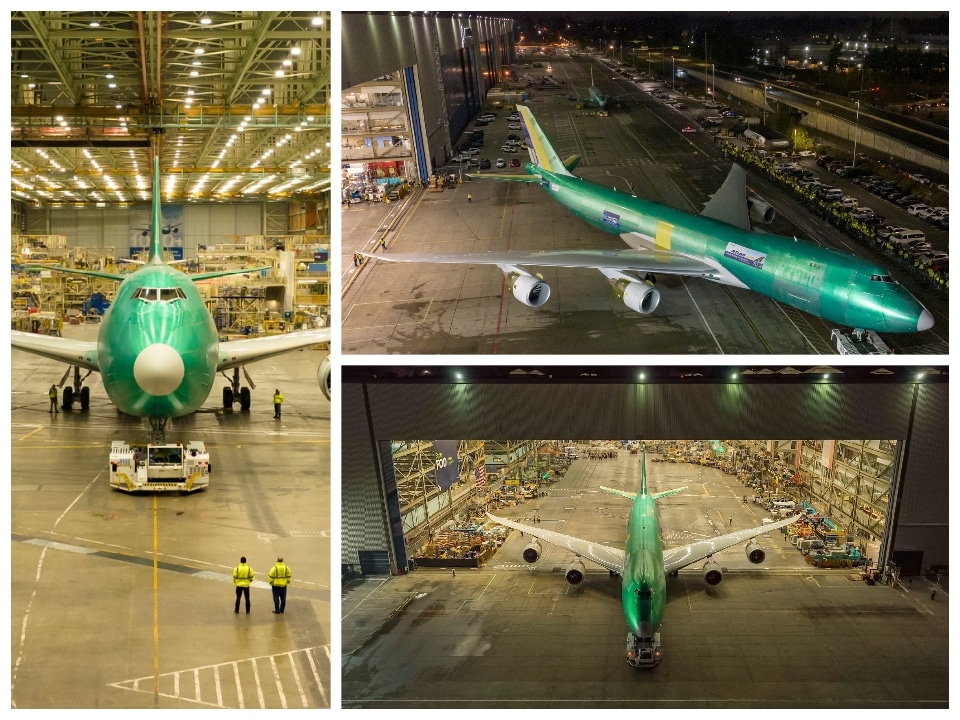
Boeing is set to roll out its final 747 from a Washington state factory on Tuesday, after more than a half-century of production.
The jumbo jet made its debut in 1969 and has since served in a variety of capacities, including cargo planes, commercial aircraft, and the Air Force One presidential aircraft. It still towers over the majority of other airplanes because it was the largest commercial aircraft in the world and the first with two aisles.

Image Courtesy : Boeing
The design of the 747 incorporated a second deck that extended from the cockpit back over the first third of the aircraft, giving it a prominent hump that gave the plane its nickname, the Whale. The 747 earned the title “Queen of the Skies” by flying more opulently. The first 747 was produced in less than 16 months by more than 50,000 Boeing workers. Since then, the business has finished 1,573 more projects.

Image Courtesy : Boeing
However, over the past 15 years or more, Boeing and its European rival Airbus released new widebody planes with two engines instead of the 747’s four. They were more fuel-efficient and profitable. Although some other foreign airlines, such the Lufthansa, still operate it, Delta was the last to use the 747 for passenger flights, which terminated in 2017.

Image Courtesy : Boeing
The cargo company Atlas Air, who placed a four-ordered 747-8 freighter early this year, is the last customer. The final was scheduled to leave Boeing’s enormous factory in Everett, Washington, on Tuesday night. With its relocation to the Washington, D.C., region, executives of Boeing are now closer to important federal government figures and the Federal Aviation Administration, which approves Boeing passenger and freight aircraft.
Since the deadly 737 Max crashes in 2018 and 2019, Boeing’s relationship with the FAA has been strained. Far longer than Boeing anticipated, it took the FAA over two years to approve design revisions and let the plane take flight again.



