
Aviation
Why the Next-Gen F-55 Fighter Jet Plan Announced by Trump Might Not Come to Fruition

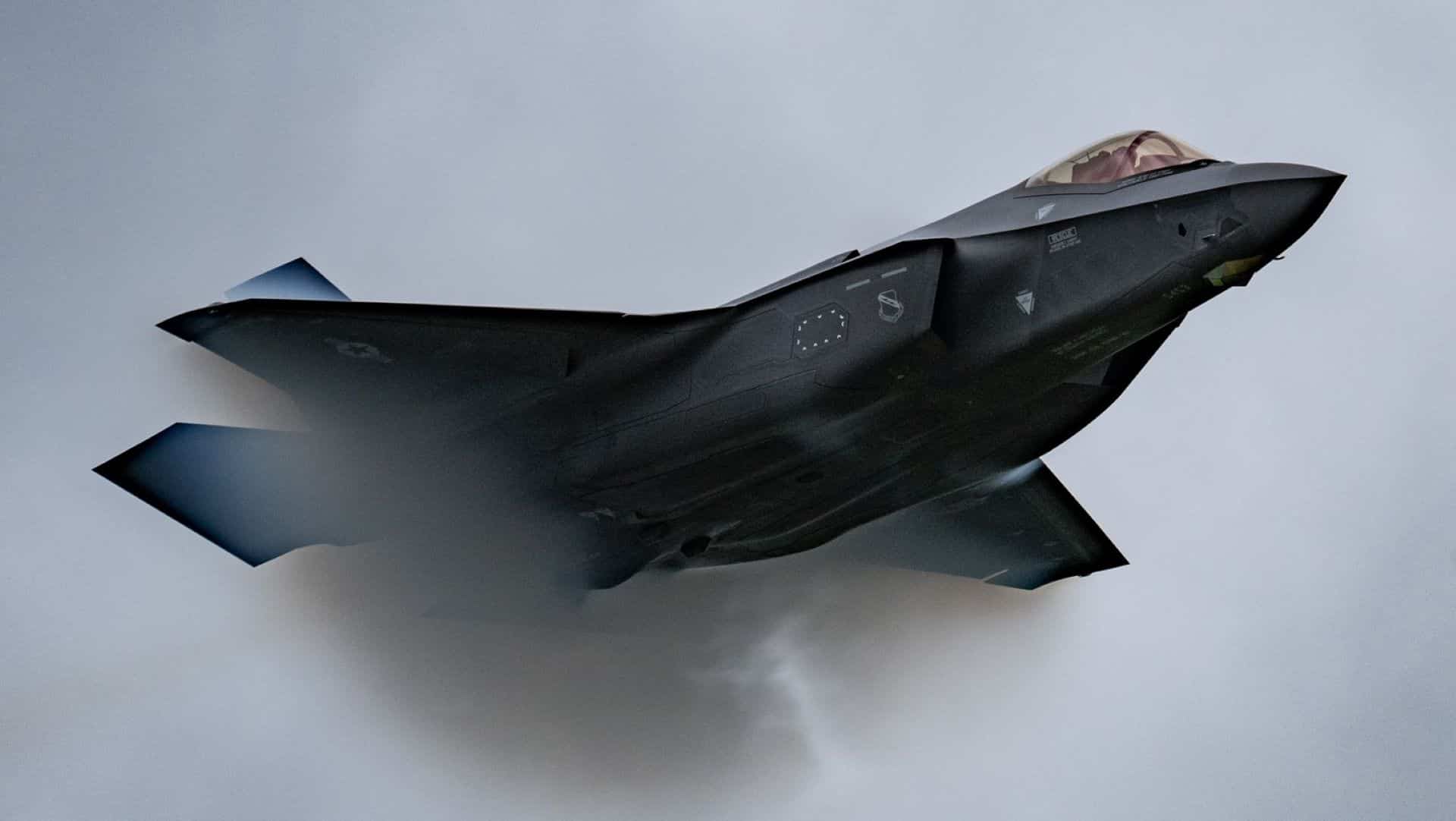
Recent statements have sparked significant discussion regarding the future of U.S. fighter jets, particularly around the possibility of upgrading the F-35 with a twin-engine variant known as the F-55.
This potential upgrade would mark a substantial change from the current single-engine design, promising improved performance, increased payload capacity, and extended range.
The F-55 Concept and Its Potential Advantages
The F-55, if developed, would be a larger and more capable aircraft derived from the F-35 platform. The increased length of the aircraft would allow for additional fuel storage, enabling longer missions, and a larger weapons bay to carry more advanced munitions. This design might resemble the Russian Su-57 in terms of size and payload capacity, allowing it to carry heavier armaments and extended-range weaponry.
However, there are trade-offs to consider. The larger size could reduce maneuverability, making the F-55 less effective in close-range dogfights, a critical aspect of air combat.
Given these challenges, some experts suggest that Lockheed Martin might find it more practical to focus on upgrading the existing single-engine F-35 with advanced avionics and weapon systems rather than undertaking the complex redesign required for the twin-engine F-55.
Technical and Strategic Challenges
Converting the F-35 to a twin-engine configuration would require a significant redesign, increasing costs and extending development timelines—contrary to current efforts to control program expenses.
The U.S. Air Force’s strategic priorities are focused on next-generation air dominance, including the sixth-generation Next Generation Air Dominance (NGAD) program being developed by Boeing, which already has substantial investment backing.
Given this context, Lockheed Martin may be reluctant to take on the financial and technical risks of independently developing the F-55 without government contracts or partnerships. There has been no official confirmation from Lockheed Martin, the Department of Defense, or other credible sources about the existence or development of the F-55 program.
Current State of the F-35 Program
The F-35 continues to face challenges related to software updates and maintenance complexities. While upgrades could improve reliability and efficiency, a move to a twin-engine design is considered highly impractical at this stage. Instead, focusing on enhancing the current single-engine platform with next-generation avionics and weapon systems is seen as a more feasible path forward.
Looking Ahead: Sixth-Generation Fighters and Networked Combat
The future of aerial combat is expected to rely heavily on networked, coordinated operations, where manned aircraft, drones, and wingmen work together via integrated communication networks. This technology, which remains largely classified, will enable real-time data sharing and coordinated attacks across multiple platforms, significantly advancing air combat capabilities.
Whether the F-55 will become a reality remains uncertain, pending further information and official statements. If developed, it could represent a major step forward for the U.S. Air Force, but until then, speculation continues.
Conclusion
While former President Trump’s comments on the F-55 have generated interest and speculation, no concrete details have been released by Lockheed Martin or the U.S. Department of Defense. The emphasis remains on developing next-generation fighters through programs like NGAD and upgrading existing platforms such as the F-22 and F-35.
What are your thoughts on the potential F-55 and its role in future U.S. air power? Share your views in the comments below.
For more aerospace news, check out JetlineIntel.
Want to buy aviation merchandise? Visit Jetshop.in.
To read Jetlinemarvel’s updates on Google News, head over to Google News.
