
Aviation
Lockheed Martin Expresses Interest in Joining AMCA Project

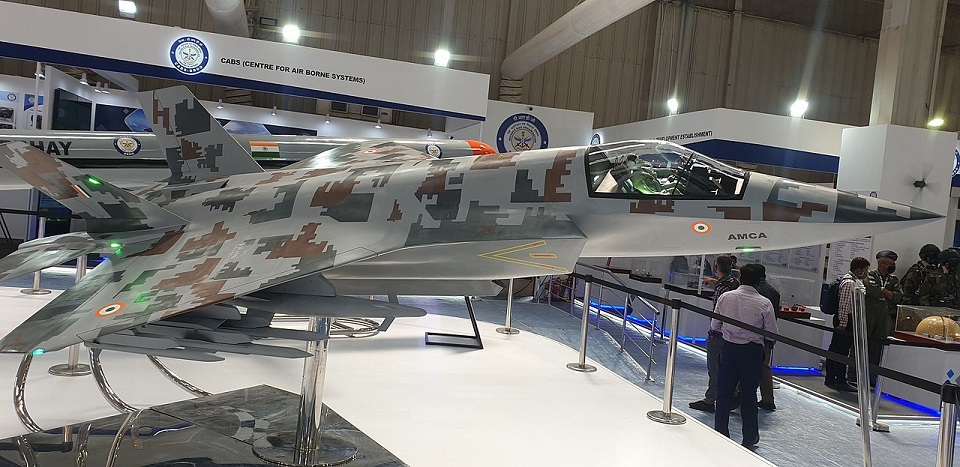
Lockheed Martin, a leading global aerospace and defense company, is demonstrating its dedication to strengthening collaborations with India’s research, industry, and academic sectors. With its rich experience in the aerospace industry and renowned for building some of the world’s most advanced jets, Lockheed Martin is now exploring opportunities to contribute to India’s aerospace sector, potentially providing a significant boost to aerospace technology in the country.
Randy Howard, Vice President of Global Pursuits at Lockheed Martin Aeronautics, recently underscored their interest in exploring “advanced transfer of technology opportunities” with Indian partners, signaling a proactive approach towards fostering technological exchange and advancement in the aerospace domain.
India has been at the forefront of fighter jet development since the 1970s, having produced its own cost-effective fighter jets and combat helicopters, while continually upgrading to maintain competitiveness on a global scale.
Lockheed Martin stands as a dominant force in the aircraft industry, renowned for developing cutting-edge planes like the F35 and F22, some of the most advanced fighter jets globally. They’ve also contributed to projects like the South Korean KF21 aircraft for defense purposes through collaborations.
Now, Lockheed Martin has set its sights on India’s defense sector manufacturing processes, expressing interest in partnering with India on its most anticipated project, the Advanced Medium Combat Aircraft (AMCA), likely to be a 5th generation fighter jet for the Indian military.
Their proposed collaboration could involve a spectrum of advanced technologies, including the Auto Ground Collision Avoidance System (Auto GCAS), a life-saving technology that intervenes to prevent ground collisions, thus significantly enhancing flight safety for Indian pilots.
Lockheed Martin is extending its expertise to design and develop an indigenous cockpit for the F-21 fighter jets, which India is procuring. This collaboration with Tata also includes the development of fighter jet wings. Established in 2023, this partnership adopts a “Ground Floor Design” strategy aimed at equipping India with an in-depth comprehension of 5th-generation cockpit technology and Man-Machine Interface (MMI) systems.
As India’s Fighter jet program advances with finalized aircraft frame and engine prototypes, Lockheed Martin has expressed interest in joining the project. They see a groundbreaking opportunity in cooperative 5th Generation Fighter Development, potentially expediting the AMCA program’s progress through technology and expertise sharing.
Furthermore, Lockheed Martin is keen on collaborating on large-wing, jet-powered UAV platforms, which could enhance India’s unmanned aerial capabilities.
While discussions are ongoing, and specific collaboration details await finalization, this initiative represents a potentially transformative stride in India’s aerospace self-reliance journey and Lockheed Martin’s strategic engagement with the Indian market.
